Law is one of the oldest and most knowledge-intensive professions in the world, and one of the last to be meaningfully touched by software. That’s not an accident. Legal work is deeply contextual, high-stakes, and built on trust in a way that made it resistant to earlier waves of automation. For decades, the industry watched finance, healthcare, and enterprise software get remade by technology while remaining largely intact. But something has shifted. The models are good enough now. The tools are purpose-built. And perhaps most importantly, the lawyers are actually using them.
Today, we’re thrilled to announce that Menlo Ventures has joined Legora’s $550 million Series D, alongside Accel, Benchmark, Bessemer Venture Partners, General Catalyst, ICONIQ, Redpoint Ventures, Y Combinator, Alkeon Capital, Bain Capital, Firstmark Capital, Sands Capital, and Starwood Capital. The round values Legora at $5.55 billion and will fuel rapid U.S. expansion for a company that has already reached 800 customers across more than 50 markets in just two years.
The Largest Untapped Opportunity in Professional AI
Anthropic recently published its Labor Market Impacts report, one of the most rigorous data-driven pictures yet of where AI is and isn’t doing its job in the professional economy. The legal findings are striking. Roughly 80% of legal tasks are within reach of today’s models based on theoretical capability. Observed AI adoption in legal, meaning what lawyers are actually using AI for day to day, sits at just 15%. That is one of the widest gaps of any professional sector in the study.
Legora is closing that gap with purpose-built tooling, deep workflow integrations, and the kind of trust that gets built firm by firm over months of real usage.
The prize is enormous. Global legal services is a $1 trillion industry, and the hourly economics of law firms mean that even modest productivity improvements compound into significant value. What convinced us most during diligence was that the ROI is already showing up in measurable ways: firms cutting deposition review from 20 hours to under two, in-house teams replacing $1,200-per-hour outside counsel reviews with work done internally in minutes, and legal leaders avoiding six-figure liability exposures they would previously have had to gamble on with outside counsel. As Max Junestrand, CEO of Legora puts it, “Over the past year, the pace of adoption in the U.S. has exceeded our expectations, as leading firms and in-house teams move decisively from experimentation to embedding AI across their organisations.”
Why Legora
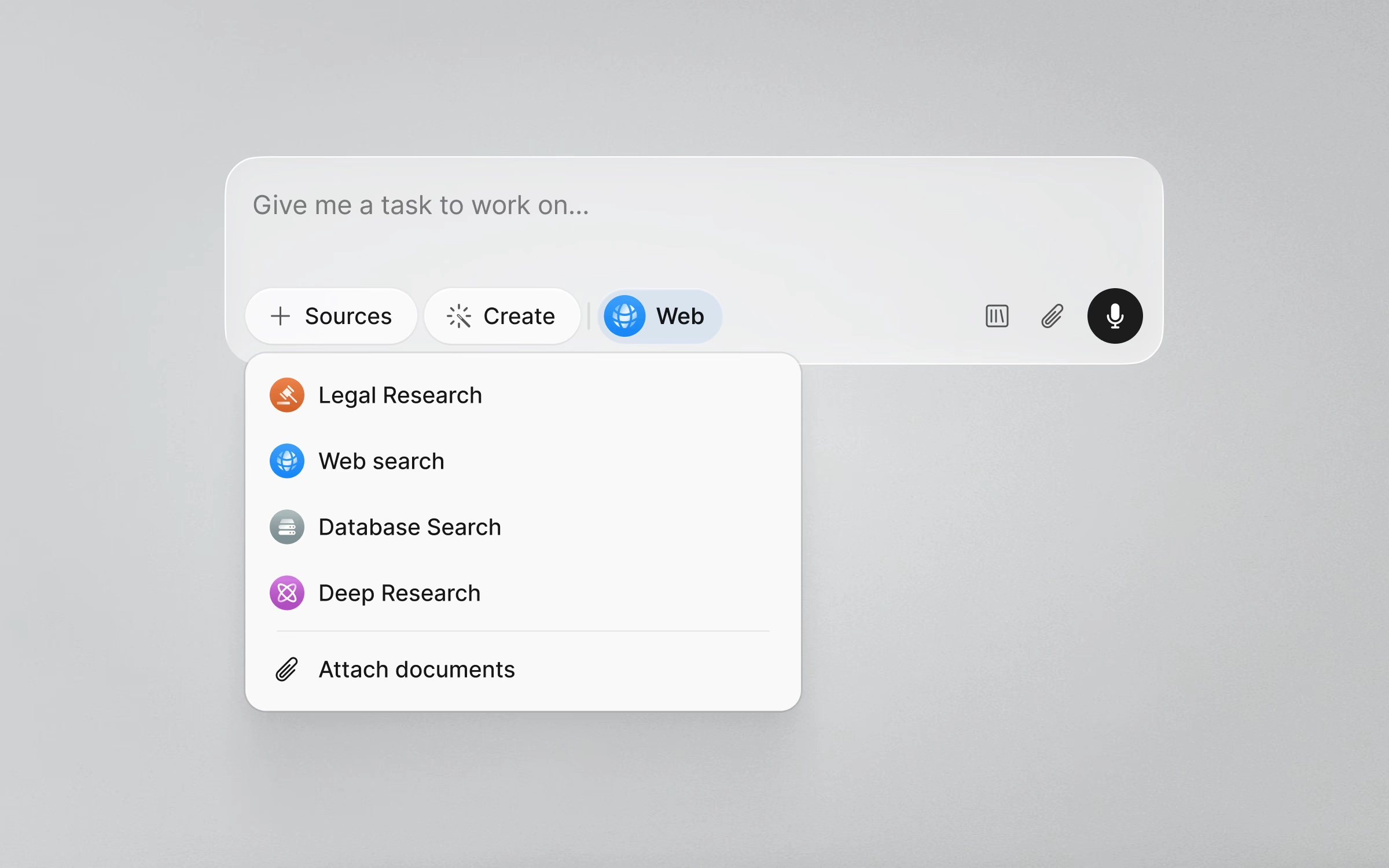
Legora was founded in Stockholm in 2023 with a conviction that legal professionals deserved a purpose-built AI workspace rather than a general-purpose chatbot dressed up for law firms. From the beginning, the team built directly into the workflows that matter: document drafting, tabular review across large document sets, Microsoft Word plugin integration, iManage connectivity, and playbooks that encode firm-specific knowledge. The result is a platform that genuinely feels like it was built by people who understand how legal work gets done.
What stood out most in our diligence wasn’t any single feature. It was the rate at which features appear. An in-house legal leader at a major pharma company gave Legora a 10 out of 10 NPS and said they ship “impressive features at an incredible rate.” One of the first large U.S. firms to adopt Legora became a collaboration partner during the pilot, with the Legora team responding to attorney feedback in real time. That kind of responsiveness is not a sales tactic. It is a product culture, and it compounds over time.
The market positioning is also distinctive. Legora built its foundation in Europe, earned dominant market share there, and developed a product deeply tuned for transactional and in-house legal work. Now Legora is bringing that same playbook to the U.S. at exactly the moment when American firms are actively making platform decisions.
On Max
Every great company starts with a founder who believes something the rest of the market hasn’t figured out yet. Max Junestrand’s version of that conviction is unusually well-documented.

Max walked away from a multimillion-dollar career in professional gaming to build Legora. He is an engineer by training who became deeply obsessed with go-to-market, a combination that is genuinely rare and shows up clearly in how Legora sells. He cracked Sweden’s most resistant law firms not by forcing his way in, but by understanding the legal culture deeply enough to earn trust from the inside.
What is perhaps most remarkable is that Max built Legora to this scale with a fraction of the capital his closest U.S. competitor has raised. That efficiency reflects something real about the culture he has built. When Legora needs to ship a feature, it ships. The team built and launched a major new capability from ideation to deployment in under 48 hours. Max describes it as a company where everyone has a “founder-esque mentality,” and from what we have seen in our diligence, that description holds.
The Road Ahead
At Menlo, we have spent years building conviction that AI will reshape the most knowledge-intensive professional workflows. We backed Anthropic early because we believed frontier models would create the conditions for a new generation of application-layer companies, built by teams that understood specific domains well enough to earn lasting trust from the people doing the work. That thesis has borne out in sector after sector.
Legal is the next one. The Anthropic data makes the size of the opportunity clear. What Legora has built makes the path to capturing it real. With this Series D, the company has the capital, the team, the customer base, and the product velocity to define the category. U.S. firms are moving from pilot to production. In-house teams are making durable platform decisions. And the gap between what AI is capable of doing in legal and what it is actually doing today is closing quickly.
We are thrilled to partner with Max and the entire Legora team in their mission to transform the efficacy of lawyers across the globe. Given their ambition and track record, we know this is only the beginning.
If you’re a law firm or legal team looking to understand what Legora can do for you, visit legora.com.

Matt is a partner at Menlo Ventures and invests multi-stage across AI infrastructure (DevOps, data stack, middleware, API platforms), AI-first SaaS (vertical and horizontal), and robotics. Since joining Menlo in 2015, Matt has led active investments in Anthropic, Alloy.AI, Benchling, Canvas, Clarifai, Carta, Envoy, Harness, HOVER, Mimic, Netlify, Observable, OpenRouter,…

Steve is a partner at Menlo focused on investments in Menlo’s Inflection Fund, which targets fast-growing Series B/C companies. He specializes in AI-powered vertical SaaS investments and supply chain technology, including Enable, Eleos, Observe.AI, Scout, 6 River Systems, ShipBob, CloudTrucks, and Parade. Steve joined the firm in 2015 as an…