Johnny began his Ph.D. evolving new Cas9 enzymes in 2012, the same year that Jennifer Doudna published her seminal paper unveiling CRISPR as a revolutionary tool for gene editing and for which she would win her Nobel Prize in 2020. In the time since, we’ve seen immense progress in correcting genetic mutations in humans with remarkable clinical efficacy and the potential for one-time cures.
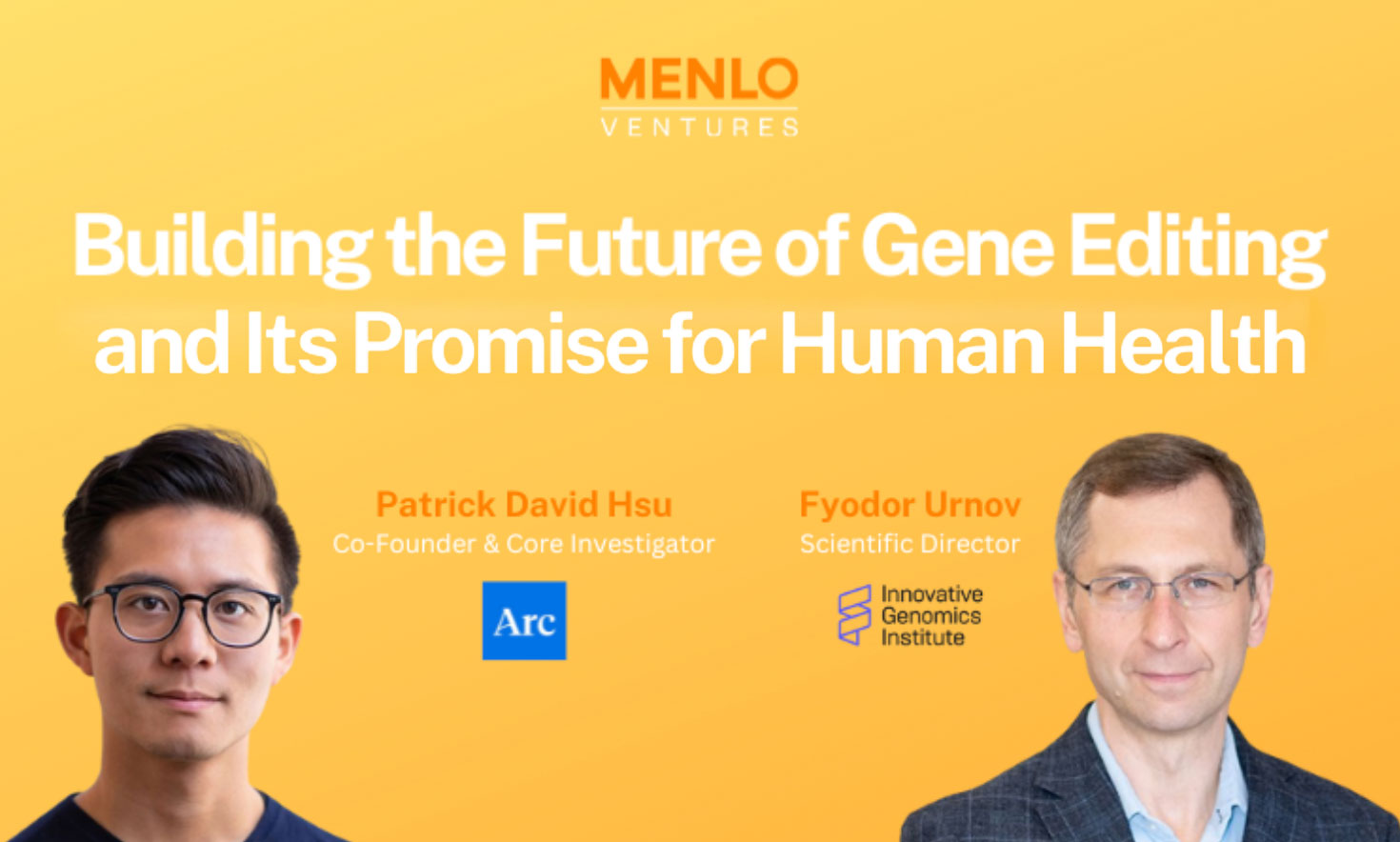
However, the number of patients and diseases treated by CRISPR is still far too limited, even as newer platforms have come online. In March 2023, Menlo hosted a fireside chat with two pioneers in the field, Fyodor Urnov and Patrick Hsu, where Fyodor made a simple yet provocative point: Gene editing worked, but under then-current practice, most patients with rare disease would never benefit. The science was moving fast, but everything else needed to catch up.
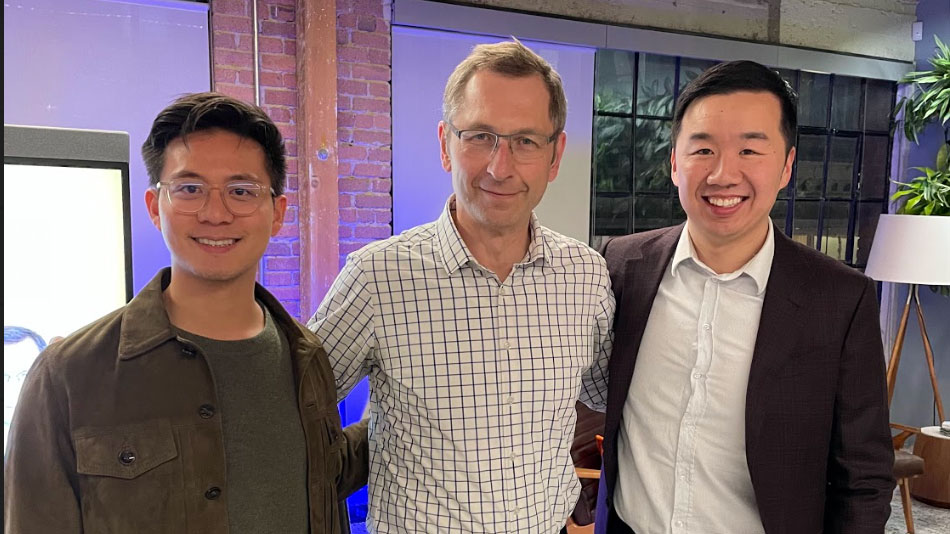
Not long after, Fyodor and Johnny met for lunch at Pizzeria da Laura in Berkeley and sketched out the beginning of Aurora Therapeutics. With a cadre of industry veterans and gene editing pioneers, Menlo incubated Aurora toward a vision of CRISPR-based cures for everyone with a rare disease.
Today, we’re announcing our $16 million seed investment in Aurora.
The Rare Disease Treatment Gap
More than 350 million people worldwide live with over 7,000 rare diseases. In most cases, the genetic cause of these diseases is known and correctable with precision gene editing tools.
While CRISPR has delivered clinical success and its first FDA-approved drug, drug development has not kept pace with the science. Most rare diseases are caused by hundreds or even thousands of distinct genetic variants. The most common mutation in a disease may justify the cost and complexity of a clinical trial, but less common mutations (which often collectively make up a majority of patients with that disease) rarely do. The result is a system where drugs are only economical to develop for not-so-rare subsets of patients with not-so-rare diseases. Most patients are left out.
Aurora is building a platform to efficiently treat every patient with rare disease, from the most common mutations to unique mutations that may affect only a single patient. Everyone deserves a cure.
The Right Moment in Time
Several shifts convinced us this problem is finally addressable.
- The technology toolkit including AI has expanded and matured. AI tools are enabling faster and more personalized designs of each molecular drug component. High throughput assays allow us to collect translatable data at scale. We can now design, test, and iterate with unprecedented speed and precision.
- Regulatory innovation will allow us to achieve clinical proof-of-concept for multiple mutations at once. The FDA has signaled openness to broader, faster development pathways. This umbrella approach has the potential to dramatically expand the number of patients served by a single program, without requiring a separate trial for every variant.
- Right-sized manufacturing will enable both faster and cheaper development. When everyone gets the same drug, manufacturing focuses on scale. Gene editing, where part of the drug is personalized, requires flexible systems. With advanced modalities coming online, our industry has greatly increased our capability to enable the development and manufacturing of multi-component drugs.
- The broader healthcare system is changing. As we highlighted in Menlo Ventures’ 2025: The State of AI in Healthcare report, we are in a unique moment in time when there is both the pressure to modernize our healthcare infrastructure and a willingness to try new innovative models for care delivery and reimbursement. Potential cures both improve patient quality of life and generate high ROI for payors.
Aurora’s first program is a treatment for phenylketonuria (PKU), a metabolic disorder caused by any of hundreds of known mutations in a single gene. From infancy onward, patients with PKU must eat a severe protein-restricted diet to avoid serious, lifelong complications. Even patients who manage their diet carefully still suffer from elevated phenylalanine and neurodevelopmental risk.
Assembling the Team
We are thrilled to co-found this company with Professors Jennifer Doudna and Fyodor Urnov. Their scientific excellence is obviously unmatched, but what has struck us is their thoughtfulness and deep care for the pursuit of this mission.
While Johnny had the privilege of leading the company during its incubation, we knew we needed a CEO with deep drug development and company building experience. Edward Kaye was the perfect leader—he started his career as a clinician treating PKU patients and then led the successful development of multiple genetic medicines, most recently as CEO of Stoke Therapeutics. Menlo is incredibly excited about the team being built at Aurora, and we will continue to work closely with them, with Johnny serving as board chair and Greg as director.
Why We’re ALL IN
At Menlo, we invest at the intersection of technology and biology where new tools can fundamentally change what’s possible in healthcare, both in terms of outcomes and cost. The biggest opportunities emerge when breakthrough science is paired with the ability to scale.
Aurora fits squarely within that thesis. It brings together foundational advances in gene editing and AI with a platform approach to reach far more patients than traditional models allow. Gene editing therapies should be developed in a repeatable process, efficiently personalized to each patient.
We’re proud to have incubated Aurora and to partner with a team that shares this view of what healthcare innovation should look like: ambitious in scope, rigorous in execution, and focused on delivering meaningful impact at scale.Learn more at auroratherapeutics.com.

As a principal at Menlo Ventures, Johnny invests in biotech and life science companies with a focus on novel therapeutics and new technologies for improving medical outcomes. He has firsthand experience working at the bench on engineering new tools for the clinic. While completing his Ph.D., Johnny helped develop gene…

Greg is a partner at Menlo Ventures, where he invests in teams trying to solve major problems in life science and healthcare, with a special interest in novel therapeutic platforms, digital health, and transformative technologies. Since joining in 2017, Greg has led Menlo investments including Cartwheel, Clear Labs, Curie, Delfi,…